Citizen Science: A Guide to Getting Started
How to choose a citizen science program that transforms science from something students read into something students do.
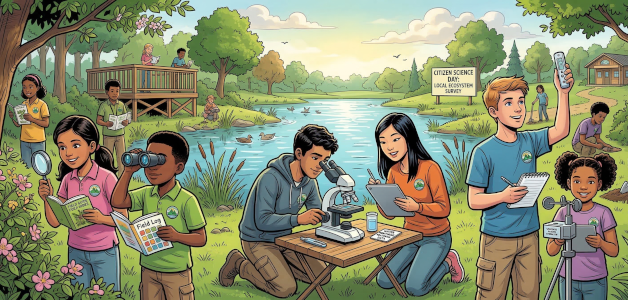
Citizen science is a form of scientific research that invites members of the public to contribute to real investigations. Professional scientists utilize volunteer "citizen scientists" to collect data, make observations, and help analyze information. By leveraging the power of the crowd, citizen science turns the entire world into a living laboratory where anyone with a curious mind and a smartphone can contribute to high-level research.
Citizen science helps researchers collect large amounts of data quickly and across wide geographic areas. Beyond data, citizen science fosters a scientifically literate populace and builds trust between the public and the scientific community. When communities participate in gathering and interpreting information about their local environment, they become better informed and more engaged in decisions that affect their surroundings.
Students practice observation, measurement, and data collection while contributing to meaningful research, transforming science from something students read about into something they actively do. In addition to building scientific thinking, strengthening data literacy, and encouraging curiosity about the natural world, it builds agency as students realize that they don't need a PhD to ask meaningful questions or contribute to the global body of human knowledge.
Is it worth it?
Citizen science has many benefits, but also takes time, teacher expertise, and student skill! Before you jump in, you need to decide if the time investment is worth your “instructional minutes.” Ask yourself:
- Does the project solve a real local problem?
It's only worth mapping invasive species if you can walk to a park or open-space down the street. - Does this hit your standards and learning goals?
Make sure that the project covers multiple areas such as data analysis (math) ecosystems (science), and human impact (social studies). - Does the project give data back to the students?
Your students need to see an obvious connection to the data they are collecting and how it impacts their word. - Is the group reputable?
Data that is captured and stored by universities, NGOs, and government organizations like NASA is likely to be around in the future. - Are the tools usable and affordable?
Ensure the upload is easy-to-use and you have funding for necessary observation and collection equipment. - Does the project match student data privacy concerns?
Projects should be COPPA/FERPA compliant or allow data to be uploaded through a teacher account.
Are you and your students ready?
Citizen science relies on accurate data. Not only do you need to have adequate and proper equipment, students need to have foundation science skills like:
- Understand measurement and the importance of recording precise and accurate data.
- Know how to graph data and analyze it for trends and patterns.
- Clearly describe observations and explain findings with evidence.
- Use scientific terminology and associated digital applications.
Students don't need these skills before you choose to do citizen science, but they do need them before they participate so that their efforts don't stall because of imprecise data that can't be utilized.
Find a project to join
While citizen science programs exist in lots of places that doesn't mean they are open to students everywhere. The best way to find an active citizen science project in your area is to search or ask AI using as many specifics as possible. For example, "What citizen science programs are open to elementary students in the San Diego area who are studying weather?"
If you want to get your feet wet with the process, get students used to using apps that make it easy to contribute data, such as:
 |
iNaturalist | Use the app to identify local plant and animal species. Sightings and identifications are reviewed by experts and data is shared with the scientific for research. |
 |
eBird | eBird collects user observations in the form of bird checklists. eBird then makes the data available to scientists. Using eBird helps document bird distribution, abundance, habitat use, and trends. |
 |
Nature's Notebook | Great for plants, the data you collect is shared to the National Phenology Database, which is freely available for data visualization and download. |
But just using an app can make students feel like their effort doesn't have a purpose. Elementary classrooms might start by connecting to projects like:
 |
Bumble Bee Watch | Take pictures of local bumble bees (not honey bees) to help scientists map and understand population diversity, health, and behavior. |
 |
Great Sunflower Project | Count the number and types of pollinators visiting plants, especially sunflowers, to help researchers understand if pollinator service is comparatively strong or weak. |
 |
Journey North | Great for plants, the data you collect is shared to the National Phenology Database, which is freely available for data visualization and download. |
National Geographic has connections to lot of citizen science projects from grades 3-12.

If your site is serious about committing to citizen science, it might be worth looking to the Zooniverse or GLOBE programs, which offer a single log on and common app/tool for many different projects.
Choose what works best for your students
Citizen science will, and should, look different depending on the age and skills of students. If you implement citizen science from elementary through high school, you can provide students and teachers with a progression of appropriate skills and challenges. For example:
Elementary School
Focus on observation, patterns, basic data recording to build curiosity and careful observation habits. Have students collect data as a class, conduct short, repeated observations, and participate in teacher-guided discussions.
Middle School
Focus on systems thinking, cause and effect, data analysis to help students see how local actions connect to larger systems. Have students complete data collection in small groups and submit on their own, compare local data to national datasets and ask follow-up questions.
High School
Focus on experimental design, statistical reasoning, research ethics to develop scientific reasoning and civic responsibility. Have students design extensions to protocols, complete statistical analysis, and develop research presentations.
Selecting the right citizen science program gives your students opportunities to make real contributions to scientific knowledge and understand that scientific discovery isn’t limited to professionals in a lab.
How will you choose to help your students activitely contribute to global scientific knowledge?

Melinda Kolk is the Editor of Creative Educator and the author of Teaching with Clay Animation. She has been helping educators implement project-based learning and creative technologies like clay animation into classroom teaching and learning for the past 15 years.




 Most Read